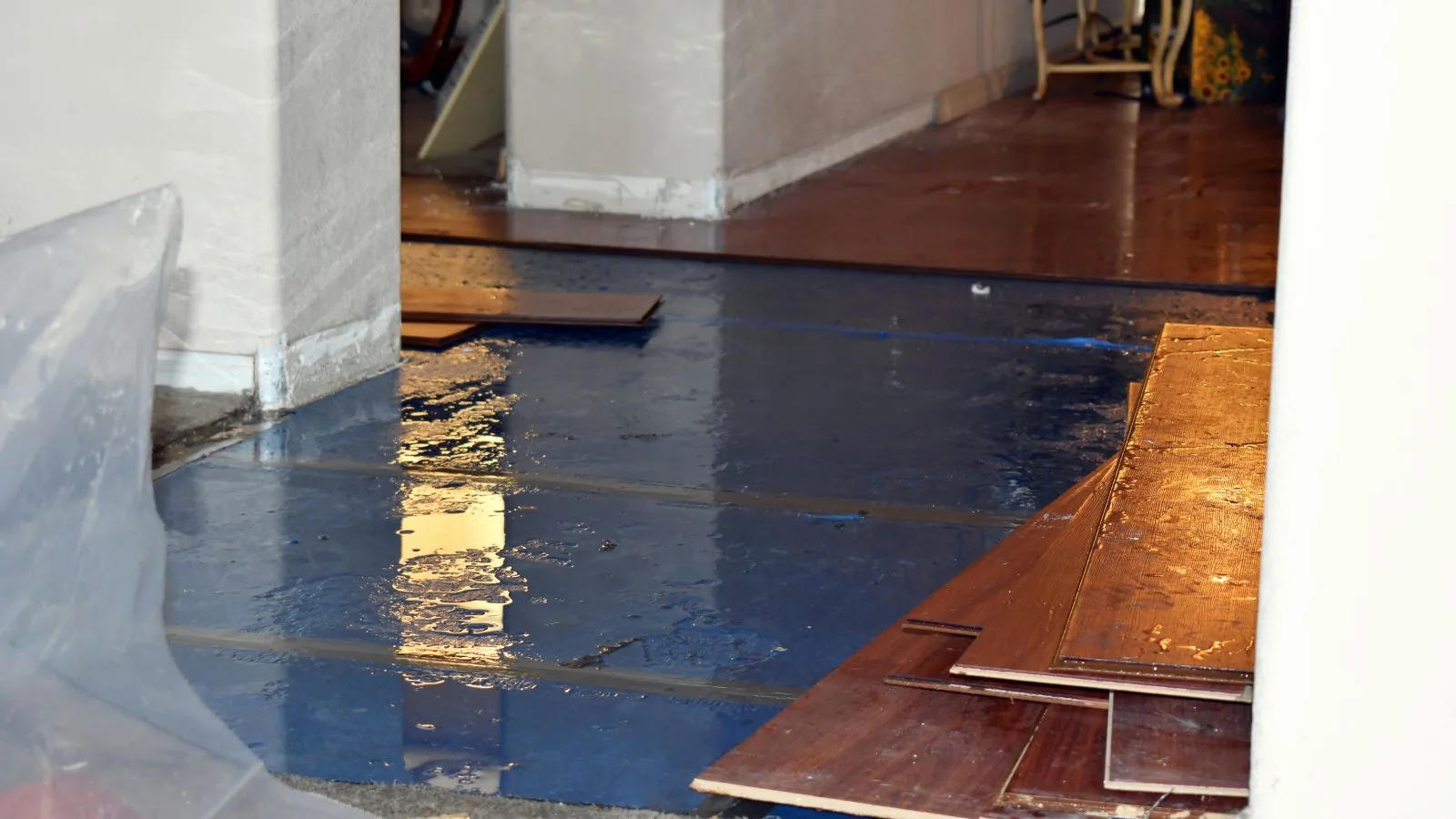
Is water leaking under my floor? Signs of a slab leak
Warm spots on the floor
A section of tile, laminate or carpet that feels warm may sit over a hot water line.
Hissing or running sound
A steady sound with all fixtures off points to a pressurized line leaking.
Unexplained water bill jump
A higher bill with no change in use suggests water is escaping somewhere.
Damp carpet or lifting floors
Laminate that swells or carpet that stays wet near an interior wall is a classic clue.
Cracks and musty smell
New cracks, a damp smell or efflorescence on a wall base can follow.
If you suspect a slab leak, shut off the main valve and call (630) 580-6401. The line is open 24/7, and a dispatcher can send a drying crew, same day when available.
Slab leaks are found by a plumber using leak detection equipment, and our crew dries what the leak soaked. Both are needed.
Slab foundations in Downers Grove homes
Many Downers Grove houses sit on basements, so a true slab-on-grade home is less common than in warmer regions, but slabs do exist under additions, garages, sunrooms, and some townhomes and condos. Water lines running under those floors face movement, soil contact and age.
Local housing data puts the median year built around 1974, with about 64 percent built in 1979 or earlier. Older copper or galvanized lines in slab sections are a typical weak point, so a leak in an addition or ground-level room is worth investigating early.
Safety around a suspected slab leak
Hot water leaks can scald and can warm the floor enough to feel it. Avoid standing in puddles near electrical outlets, and turn off the water heater if hot water appears to be the source.
If water appears at an outlet or a baseboard heater, stay clear and call before touching anything.
Slab leak damage versus other leaks
| Feature | Slab leak | Overhead pipe leak |
|---|---|---|
| Where water appears | Floor, wall base, sometimes through cracks | Ceiling, upper wall |
| Speed | Often slow and steady | Can be sudden |
| Typical finding | Warm floor or hissing line | Stain and drip |
| Repair path | Leak detection, then reroute or repair | Direct pipe repair |
| Related page | This page | Burst pipe water damage |
How we handle slab leak damage
Shut off and detect
A plumber confirms the leak location with acoustic and thermal methods.
Remove wet flooring
Carpet, pad, laminate and wet baseboards are lifted as needed.
Map moisture
Meters check the slab surface, wall base and adjoining rooms.
Dry in place
Floor drying mats, air movers and dehumidifiers bring materials to dry standard.
Prepare for the rebuild
Flooring replacement is scoped once the structure is dry. See carpet water damage restoration.
What changes the price
Duration and volume
A long, slow leak soaks wall bases and flooring further.
Floor covering
Tile, laminate and carpet each decide what can be dried versus removed.
Extent of spread
Adjoining rooms add equipment and time.
Concrete drying
Slabs hold water and dry slowly, increasing equipment days.
Plumbing repair
Leak detection and repair are billed by the plumber.
Insurance note
Coverage for slab leaks depends on the policy, the cause and how long the leak ran. Sudden failures are more often covered than long-term seepage. Read your policy or ask your insurer, and save the plumber report.
Why slab leaks dry slowly
Concrete is porous and holds water like a dense sponge. Even after the leak is repaired, the slab keeps releasing moisture upward for days or weeks, which is why flooring laid over it can stay damp and develop odors.
Drying a slab uses dehumidifiers to lower the humidity above it and mats or fans to move air across the surface. The crew measures the slab surface and the air to decide when the floor covering can safely go back.
What to do before help arrives
- Shut off the main water valve and see whether the meter keeps moving.
- Do not drill into or cut the slab to look for the pipe.
- Turn off the water heater if hot water lines may be involved.
- Photograph wet flooring, warm spots and any water on the floor.
Think you have a slab leak?
Call the 24/7 line for next steps while you arrange leak detection.
Rooms above the slab can also be affected, as in kitchen water damage restoration. Coverage extends to Willowbrook and Darien.
Frequently asked questions
Do you handle slab leak water damage at night or on weekends in Downers Grove?
Yes. The line is open 24/7, so a hissing floor or sudden flooding at night gets an after-hours dispatch. Same-day response is offered when available.
Do you find the leak or do I need a plumber?
A plumber with leak detection equipment finds and repairs the line. We handle the water damage that follows.
How do I know if the warm spot is a leak or just my heating?
A warm spot with a water meter that keeps moving when all fixtures are off is a strong clue. A plumber can confirm.
Will drying the slab take long?
Concrete releases moisture slowly, so drying runs longer than for surface water. Readings decide when it is done.
Can I keep my flooring?
Sometimes. Tile can often be dried in place, while laminate and carpet usually must be replaced after a long exposure.
Does slab leak damage cause mold?
It can if wall bases and flooring remain damp. Drying promptly is the best step, and testing is done only if signs appear.