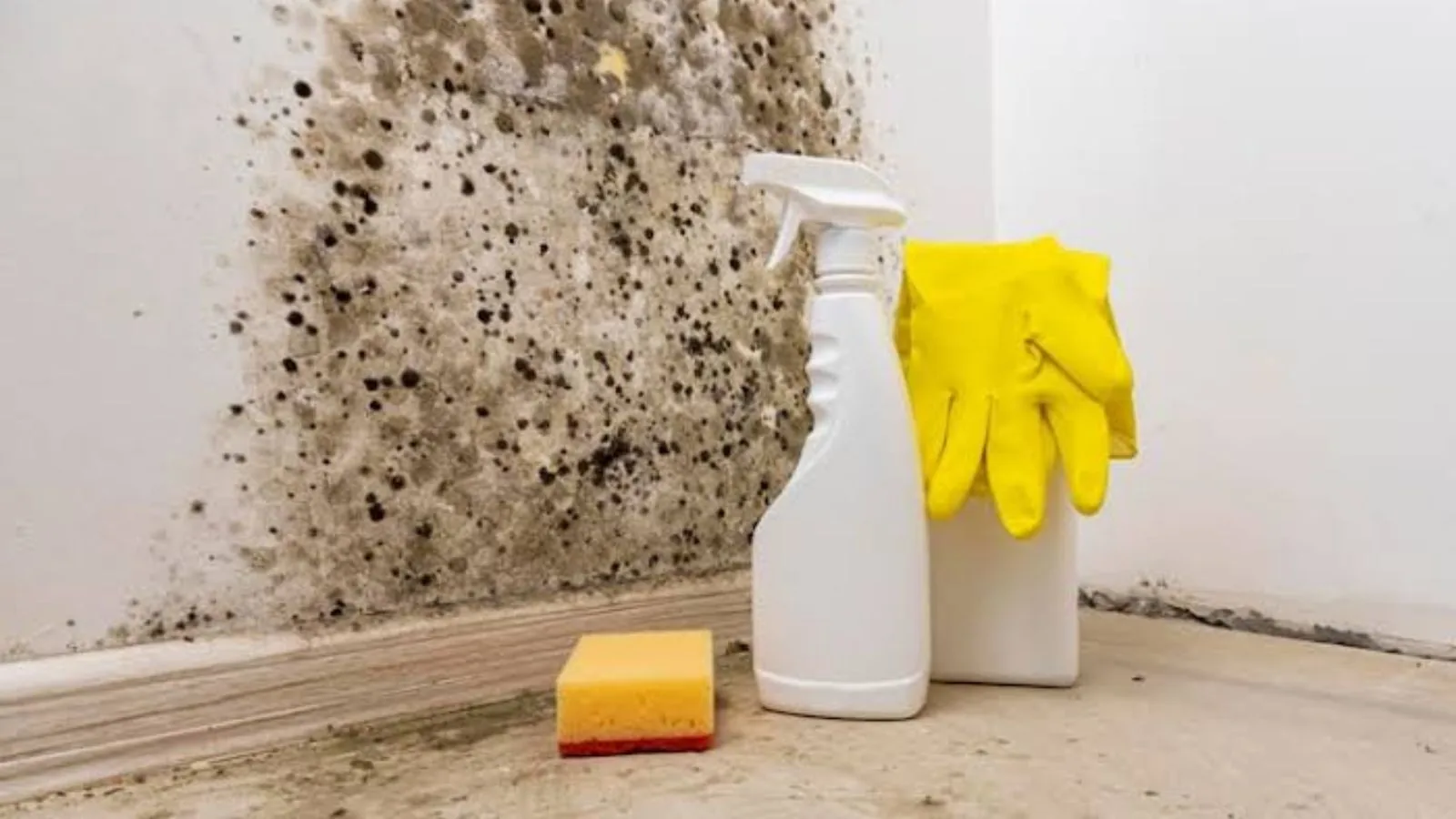
Is that mold? Musty smells, spots and stains after a leak
Musty smells, fuzzy or dark patches, peeling paint and a damp feel near a past leak are common reasons people call. Some stains are just water marks and some are growth, and only testing or a trained inspection can say which.
Call (630) 580-6401 to describe what you found. If you can see a source, such as a leaking toilet, a dripping AC line or a wet wall, shut it off first.
What mold needs and what it does not
Mold needs moisture, organic material and time. It grows on drywall paper, wood, insulation and dust when materials stay damp. Removing the moisture is the first and most important step, which is why drying comes before cleaning.
Health questions belong to a physician. We do not diagnose or make health claims, and we do not promise results that no one can guarantee, such as a space that will never see mold again.
Inspection, testing and clearance
Inspect and map moisture
A technician checks visible growth and measures moisture in nearby materials.
Test where it helps
Air or surface sampling can confirm what is present and its extent. Testing decisions depend on what is found.
Contain
Plastic barriers and negative air limit spread to clean areas.
Remove and clean
Affected porous materials are removed, and hard surfaces are cleaned following ANSI/IICRC S520.
Clearance check
After cleaning, a post-remediation check confirms the area meets the goal. Independent testing is available if you or a lender prefer it.
Lender or buyer requires mold removal
Real estate transactions sometimes hinge on mold. If a lender, buyer or inspector requires remediation, tell the dispatcher when you call so the scope, testing and clearance documentation can be planned.
Ask whether your state licenses mold work and request a written scope and clearance results.
Common sources
| Source | Why it grows | Fix first |
|---|---|---|
| Toilet or supply seep | Slow leak keeps subfloor and wall damp | Plumber, then drying |
| AC condensate | Pan overflow wets ceiling and insulation | See AC leak water damage |
| Basement seepage | Wall base and storage items stay damp | See basement water damage cleanup |
| Roof leak | Attic insulation and decking stay wet | Roofer, then interior drying |
| Crawl space moisture | Humid air and wet insulation | See crawl space water damage |
What affects mold remediation cost
Area affected
More square feet means more containment and removal.
Materials
Drywall and insulation are removed, wood may be cleaned.
Testing
Sampling and clearance add scope.
Access
Attics and crawl spaces take longer.
Moisture source
Fixing the leak is a separate trade.
Insurance note
Mold coverage depends on what caused the moisture, according to the Illinois Department of Insurance. Check your policy and ask your insurer before work starts.
Mold after a toilet or AC condensate leak
Two quiet sources show up again and again: a toilet that seeps at the wax ring or supply line, and an AC system whose condensate drain backs up. Both wet the same materials for a long time at low volume, which is the pattern mold prefers.
The fix starts with the leak. A plumber replaces the seal or line, an HVAC technician clears the drain, and then moisture is measured and the wet materials are dried or removed. Remediation follows if growth is found.
What to ask a mold company
- Do you follow ANSI/IICRC S520, and how do you define the work area?
- What testing do you recommend and who performs clearance?
- What will be removed and what will be cleaned?
- How do you control dust during removal?
- What documents will I receive at the end?
Clear answers show whether the company has a defined process. Ask whether your state licenses mold work, since the rules vary and the state agency is the place to confirm them.
What happens to belongings
Hard items such as glass, metal and sealed plastic can often be cleaned. Porous items such as cardboard, fabric and paper may need to be discarded. The crew will go over a list with you before anything is removed.
What to do before help arrives
- Stop the water source first. Mold cannot be dealt with while the area stays wet.
- Do not sweep, sand or blow air across moldy surfaces.
- Close off the room and switch off fans that point at the area.
- Photograph the area and note the date it was found.
Mold found after a leak?
Call and we will explain the testing and containment options.
Mold remediation often follows structural drying and dehumidification. Crews respond in Darien and Clarendon Hills.
Frequently asked questions
Can mold be tested for before it is removed?
Yes. Testing can help define the extent and species, though many cases proceed on visible growth and moisture readings.
Is mold removal different from water damage cleanup?
Yes. Water cleanup dries materials, while mold remediation removes or cleans growth using containment and the S520 approach.
Does bleach kill mold on drywall?
Bleach does not remove growth from porous materials. Affected drywall is generally cut out.
Do I need a clearance test?
It is recommended after remediation, and required by some lenders. Ask for results in writing.
Will mold come back?
No one can promise that. If the moisture source is fixed and the area stays dry, the conditions that support growth are removed.
Who do I ask about health concerns?
A physician. We handle building materials and moisture and do not make health claims.