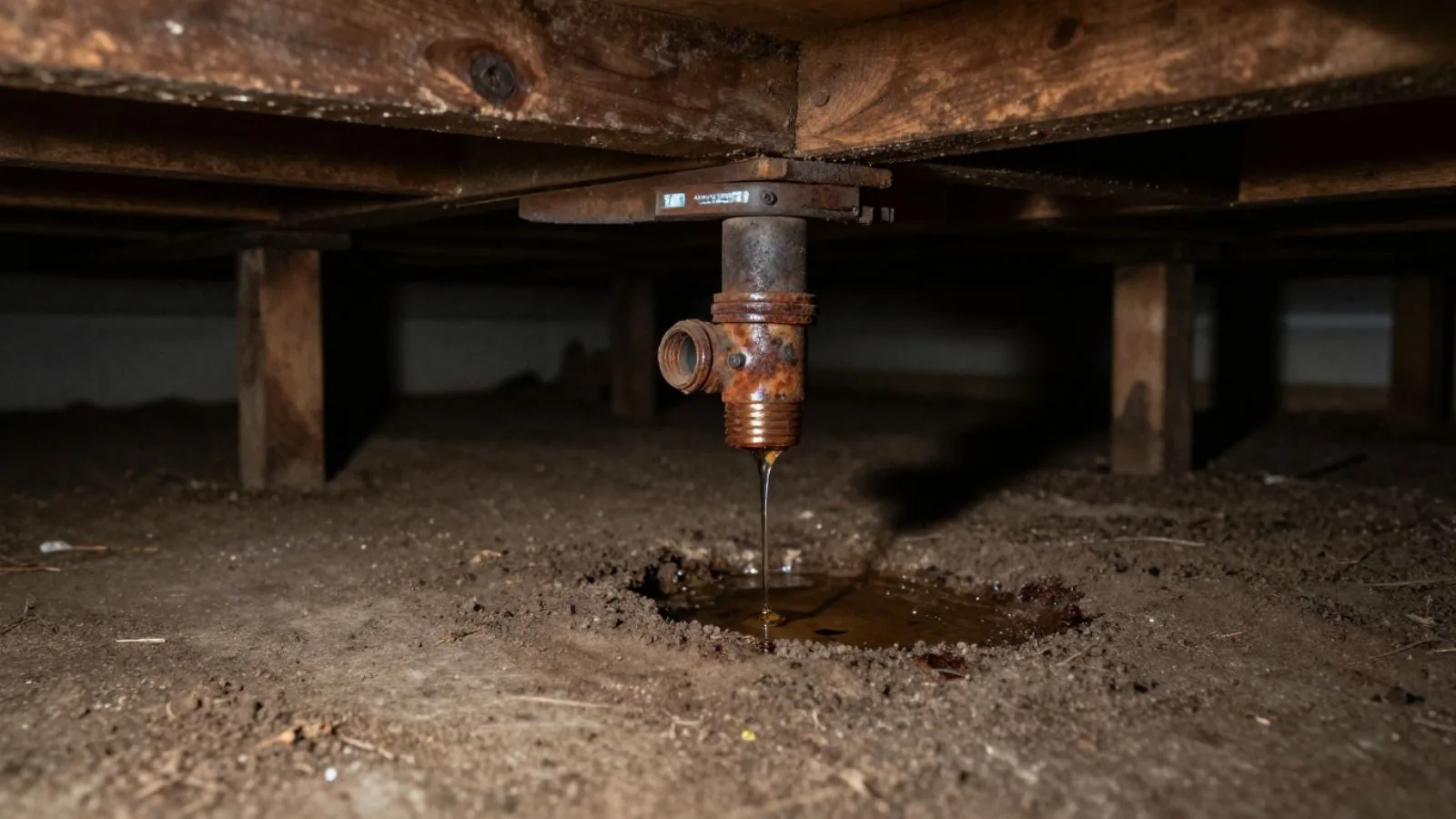
Water in a crawl space: what is going on
Crawl spaces collect water from several directions: groundwater after heavy rain, a failed supply line, a clogged drain, or poorly directed gutters. The space is dark, tight and easy to forget, and wet insulation can sag onto the floor joists above.
If you can smell damp soil or notice cold floors over the crawl space, call (630) 580-6401 and describe what you see.
| Source | Clue | Who fixes the cause |
|---|---|---|
| Groundwater after storms | Water only after heavy rain | Drainage contractor, sump options |
| Plumbing leak | Water without rain, steady damp spot | Plumber |
| Roof or gutter runoff | Water near exterior walls | Gutter and grading work |
| Appliance or HVAC leak | Water under kitchen, bath or air handler | See appliance leak water damage |
Where Downers Grove stormwater rules come in
The Village of Downers Grove has adopted stormwater and sump discharge rules, with updates in 2014 and 2018. Those rules affect where a sump or foundation drain may discharge, so a fix that sends water to a neighbor or onto a sidewalk can create a separate problem.
Before adding a pump or drain, ask the Village Community Development staff what is allowed at your address. We handle water removal and drying and do not design drainage, so a drainage contractor is the next call after cleanup if groundwater is the cause.
Crawl space safety
Crawl spaces can hide electrical wires, ducts and low clearance. Do not enter a flooded crawl space with live power nearby, and do not crawl into standing water.
Crews use protective gear, lighting and ventilation, and will tell you if a space is not safe to enter.
How crawl space water damage is handled
Water removal
Submersible pumps and wet vacuums remove standing water and mud.
Insulation and debris
Wet insulation and vapor barrier pieces that cannot dry are removed.
Moisture check
Joists, subfloor and sill plates are measured with meters.
Drying
Air movers and dehumidifiers dry the cavity and the floor framing above. See structural drying and dehumidification.
Cleanup and notes
Surfaces are cleaned and a written summary of readings and next steps is provided.
Cost factors
Space size and clearance
Low clearance slows work and may require specialty equipment.
Water depth
Deeper water needs more pumping.
Insulation type
Fiberglass batts and spray foam respond very differently to water.
Drying duration
Floor framing and subfloor above dry slowly.
Drainage work
Sump, grading and plumbing repairs are separate trades.
Insurance note
Groundwater seepage and sump failure are usually excluded from a standard homeowners policy unless an endorsement was added, according to the Illinois Department of Insurance. Check your policy and ask your insurer about water backup coverage.
What to look for in a crawl space check
- Standing water or mud on the ground.
- Insulation that sags, looks dark or feels wet.
- Dripping pipes or wet joists under bathrooms and kitchens.
- A musty smell that rises into the house above.
- Rust on ducts, hangers or fasteners.
These signs help you describe the problem when you call. If you can see wet insulation hanging down, avoid touching it with bare hands and avoid breathing dust from it.
In many homes the crawl space also holds ducts and plumbing, so a leak can affect heating and water supply as well. Tell the dispatcher what systems run through the space.
After drying, ask the crew for a written summary of the readings. It gives you a reference if the space gets wet again.
Crawl space humidity after the water is gone
Even when standing water is removed, a crawl space can stay humid for weeks. Warm summer air meets cool soil and ducts, and moisture condenses on joists, pipes and insulation. That slow dampness is what keeps floors above cold and musty.
Dehumidifiers sized for the space and a closed, intact vapor barrier on the ground help control it. Whether a permanent system is justified is a decision for a crawl space or drainage contractor, and the moisture readings from the cleanup give them a baseline.
Crawl space wet?
Call and a dispatcher will schedule the pump out and drying plan.
A crawl space leak can also reach finished floors above, as discussed in hardwood floor water damage repair. Crews serve Clarendon Hills and Oak Brook.
Frequently asked questions
Should I be concerned about mold in a wet crawl space?
Dampness supports mold growth, so drying matters. Testing is only needed if you see growth or smell it, and remediation follows ANSI/IICRC S520 where it applies.
Can you waterproof my crawl space?
No. Restoration removes water and dries the structure, while waterproofing or drainage is a separate contractor job. We can tell you what readings suggest.
Does wet insulation have to be replaced?
Fiberglass that stayed wet is usually removed because it holds moisture against framing. Closed-cell foam may be dried and kept.
How do I know the floors above are dry?
Moisture meters read floor framing and subfloor. Drying continues until readings are in the dry range.
Will a dehumidifier alone fix a damp crawl space?
It can help after the water is removed, but it does not fix the source. The cause still needs a fix.
Is a sump pump required by the Village?
Rules vary by property and situation. Ask the Village Community Development staff about requirements for your address.