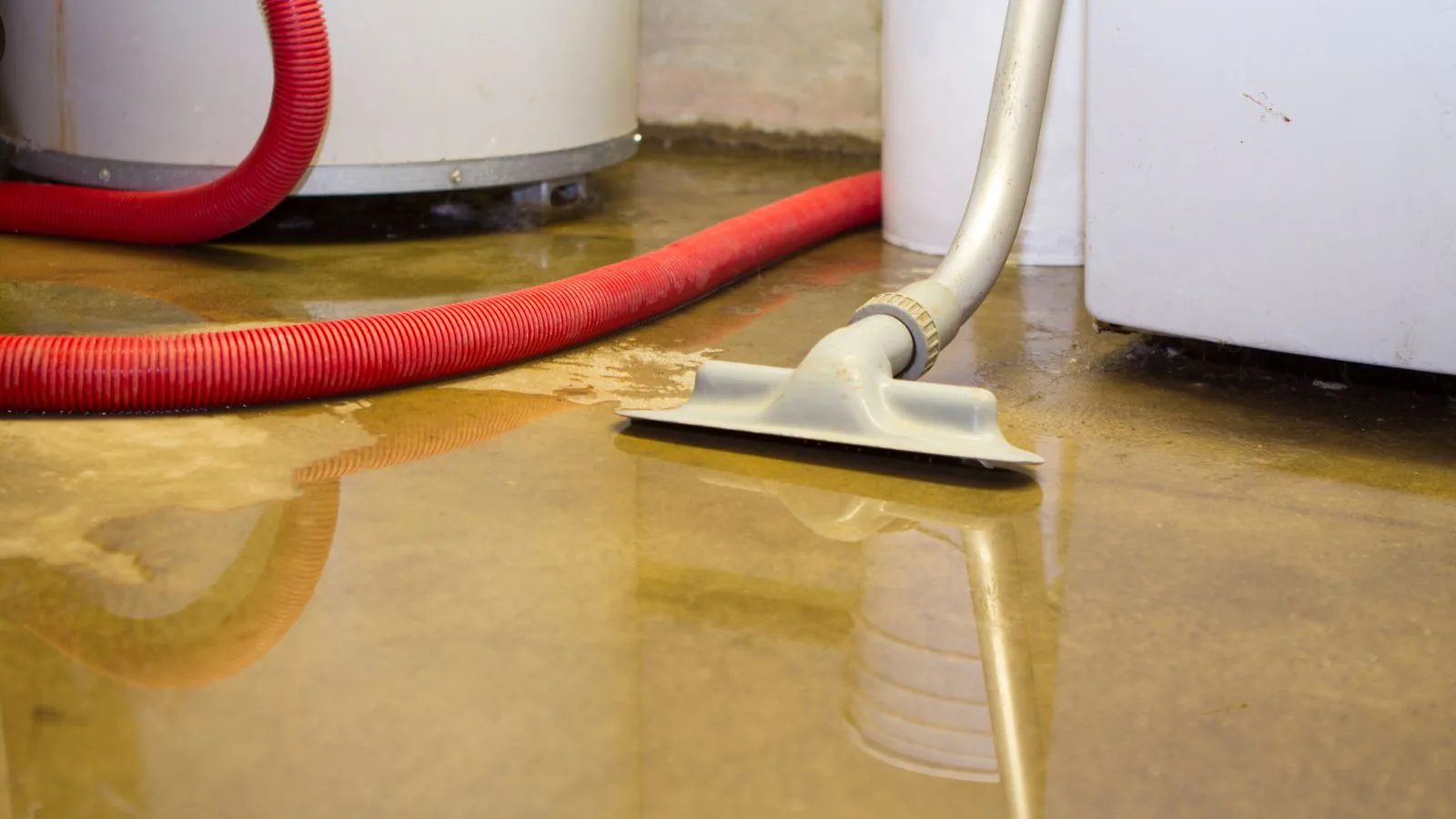
If an appliance is leaking, close the small shutoff valve behind it and unplug it only if the cord and outlet are dry. Then call (630) 580-6401.
The 24/7 line sends a crew with same-day response when available, including after-hours calls.
The usual suspects behind an appliance flood
A washer supply hose can burst under constant pressure, and one snapped valve can spray for as long as nobody is home. Dishwasher supply lines, refrigerator ice-maker tubing, and drain hoses behind a kitchen sink fail in quieter ways, often dripping inside a cabinet before water reaches the floor.
Because the water is usually clean at the start, the faster it is removed the more likely flooring, cabinets and drywall can be dried in place rather than replaced.
| Appliance | Common failure | Where the water ends up |
|---|---|---|
| Washing machine | Supply hose burst or valve snap | Laundry floor, basement ceiling below, adjoining rooms |
| Dishwasher | Supply or drain line leak | Cabinet base, subfloor, kitchen flooring |
| Refrigerator | Ice maker tube or water filter | Under the unit, along flooring seams |
| Sink and disposal | Drain or trap leak | Cabinet floor and wall behind it |
| Water softener | Fitting or drain | Basement floor and wall base |
Electrical safety near appliance leaks
Appliances run on live power, and many leaks are near outlets or cords. Do not touch a plugged-in appliance standing in water.
If the outlet or breaker panel is wet, stay out and tell the dispatcher on the first call.
How we handle an appliance leak
- Confirm the water is off and the electrical situation is safe.
- Remove standing water from flooring and cabinet interiors.
- Pull the appliance out if needed and check the wall and floor behind it.
- Take moisture readings and open cabinets, toe kicks or baseboards where water is trapped.
- Set drying equipment and re-check readings until materials are dry.
Kitchen cabinets and flooring each have their own tradeoffs, which are laid out in kitchen water damage restoration. When the leak ran through the floor, a ceiling below may need attention, as covered in ceiling water damage repair.
A washer valve that breaks while you are out
A common call is a washer valve that fails while the house is empty. By the time someone gets home, the floor, the basement ceiling and sometimes the furnace room are affected.
The fix has two parts: a plumber replaces the valve or hose, and restoration dries the area. Consider braided stainless hoses and shutting the valves when you travel, which is a plumber recommendation and not a restoration service.
What affects the cost
Duration of the leak
A leak caught in minutes differs from one that ran all day.
Cabinet and floor type
Particleboard cabinet bases swell and often need replacement, solid wood often dries.
Reach into other floors
Water that reaches the level below widens the job.
Drying days
Wall cavities and subfloor take more days than surface water.
Repair and replacement
Appliance and plumbing work are not part of restoration.
Insurance note
A sudden appliance line failure is often covered, while a slow leak that went on for weeks may not be. Check your policy or ask your insurer, and keep the failed hose or valve for reference.
What to document before cleanup starts
- Photos of the appliance, the hose or valve that failed, and the water on the floor.
- The time you discovered the leak and the last time you saw the area dry.
- The make and model of the appliance and any recent service.
- The affected rooms, including any ceiling below the leak.
These notes help your insurer and the crew understand how long the water ran. They also help a plumber choose the right replacement part. Keep the failed hose or valve in a bag until the claim is closed.
ANSI/IICRC S500 is the published standard for professional water damage restoration. It defines the water categories, and a leaking washer supply line or dishwasher hose usually starts as clean water that degrades as it sits.
Residential areas such as Denburn Woods see the same household causes as everywhere else, from washer lines to dishwasher hoses.
Hose burst or valve snapped?
Call the 24/7 line and a dispatcher can talk through the shutoff.
For Willowbrook and Darien homes the same crews respond, see the pages for Willowbrook and Darien.
Frequently asked questions
Do you respond to appliance leaks at night or on weekends in Downers Grove?
Yes. The line is open 24/7 and a washer that floods a basement at midnight gets the same dispatch as a leak at noon. Same-day response is offered when available.
Can I just mop up and let it air dry?
Mopping removes surface water but not what has soaked into cabinets, baseboards and subfloor. A moisture reading shows whether those are dry.
Do I need to pull the washer out?
Often yes, because water collects behind and under it. Crews can move it safely so you do not strain.
Will the hardwood floor survive?
Sometimes. Fast drying helps, and the page on hardwood floor water damage repair explains cupping and when boards must be replaced.
Should I call my insurer first?
You can call at any point. Tell the insurer about the loss early and still stop the water and start drying, since delay can make the damage worse.
Is there a way to prevent the next leak?
Replace old rubber hoses with braided lines, check shutoff valves and avoid running appliances while you are away.