Plenty of water events are small enough to handle yourself. The trouble is that wet materials can feel dry on the surface while still holding moisture below. Knowing which jobs fit DIY drying saves time and avoids a bigger repair.
Treat this as a decision guide. When in doubt, call and ask, since a quick reading is cheaper than a repair.
Jobs that are usually safe to handle yourself
- A spilled bucket or a small overflow from a sink on a sealed hard floor.
- A few damp towels, a wet bath mat or a small area of damp carpet with clean water.
- Condensation on windows or pipes.
- A minor leak that you caught within minutes and that did not reach walls.
For these, mop or blot the water, open windows if the weather allows, run a fan and a dehumidifier and check again the next day. Lift rugs and furniture so air reaches the floor.
Jobs to hand off
| Situation | DIY drying? | Reason |
|---|---|---|
| Clean water, small spot, hard floor | Yes | Water has little place to hide |
| Wet carpet and pad | Maybe | Pad holds water, see carpet water damage restoration |
| Wet drywall or baseboard | Rarely | Wicking hides moisture in the cavity |
| Flooded basement | No | Electrical risk, volume and contamination |
| Sewage or dark water | No | Contaminated water needs protective steps |
| Water more than a day old | Rarely | Odor and mold risk rise with time |
How to dry safely at home
- Make sure the water source is stopped and power to the wet area is safe.
- Remove standing water with a mop, towels or a wet vacuum made for water.
- Lift or move furniture and pull back area rugs.
- Run fans and a dehumidifier, and keep doors closed so the dehumidifier works on a smaller air volume.
- Check the area after 24 hours with your hand and a moisture meter if you have one.
- Look at baseboards, wall bases and the ceiling below for signs of hidden moisture.
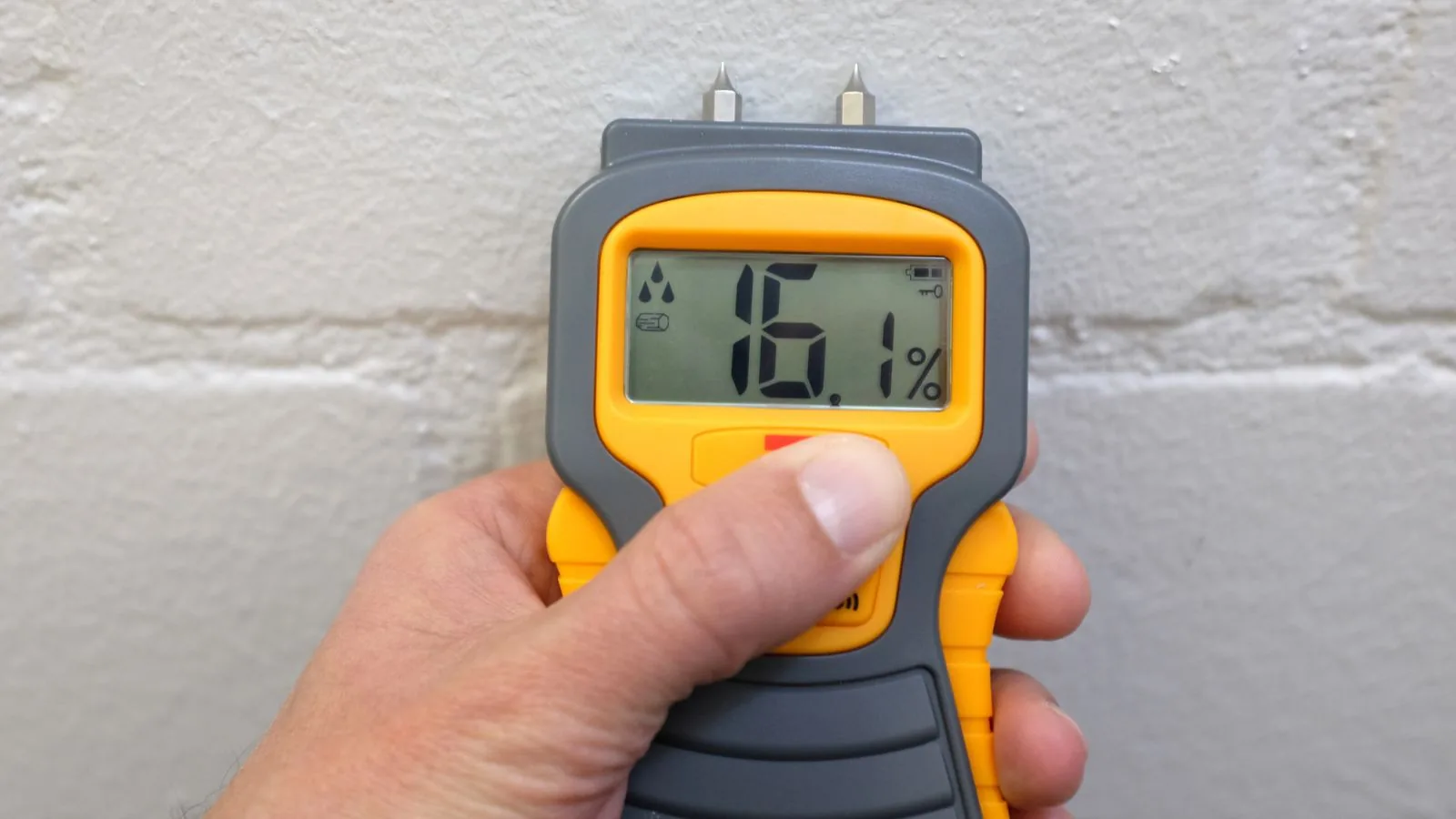
A cheap moisture meter, available at most hardware stores, makes a big difference. A reading well above a dry reference spot in the same room means the material is still wet.
Signs the area is not really dry
Cool or clammy surface
Evaporation cools surfaces, so a wall that feels cool may still be wet.
Musty smell
A smell that appears a day or two later is a warning.
Warped trim or floor edges
Wood swells as it absorbs water.
Peeling or bubbling paint
Moisture is moving through the wall.
Using a moisture meter well
Take a reading in an area that was never wet to establish what dry looks like in your home. Then take readings in the wet area, moving outward in a grid until numbers match your dry reference.
Check low on walls, at corners and along baseboards, since moisture wicks upward and collects at the bottom. Record the numbers and the date. Falling numbers over several days show drying is working, and flat numbers mean something is still feeding the area.
Common DIY mistakes
- Turning the heat up high, which can drive moisture into cavities instead of out.
- Closing off the room without a dehumidifier, which keeps humid air trapped.
- Using fans without removing the water first.
- Covering wet flooring with new rugs or boards.
- Stopping too early because the surface feels dry.
A steady schedule helps: remove water, run air movement and a dehumidifier, measure daily and stop only when numbers match your dry reference.
A simple schedule for a small job
| When | Action | Check |
|---|---|---|
| Hour 0 | Stop the source and remove standing water | No visible water remains |
| Hours 1 to 4 | Start fans and a dehumidifier, lift rugs | Air is moving across wet surfaces |
| Day 1 | Check the floor, wall base and ceiling below | Look for stains and warped trim |
| Day 2 and 3 | Take meter readings | Compare with a dry reference |
| Day 4 or later | Stop only when readings match dry | No musty smell |
If readings stay high after three days, or the smell appears, stop guessing and call for a professional reading. It is a small step that can prevent a much bigger repair.
Safety around DIY drying
Use extension cords rated for the load, keep them off wet floors and plug into protected outlets. Do not place fans in standing water. If any circuit trips, stop and have it checked.
Wear gloves when handling wet materials, and ventilate the room. If the water might have been contaminated, treat the job as a professional one.
Know when to stop
If you have followed these steps for three days and the meter still reads wet, or a smell appears, you are likely dealing with moisture inside the structure. At that point, calling for readings and equipment is faster and cheaper than continuing to guess.
Professional drying follows ANSI/IICRC S500, the published standard, which sets drying goals by material. A homeowner without a moisture meter cannot confirm that a goal has been reached.
Why older Downers Grove homes need extra care
Local housing data puts the median year built in Downers Grove around 1974, with some downtown homes dating to the mid 19th century. Older homes often have plaster walls, layered flooring and original basements that hide moisture longer.
If your house is older, take extra care with walls and floors. A surface that looks dry can still be wet in layers beneath it, so check with a meter or call for readings.
When to call
Call if more than one room is wet, if water touched drywall or the subfloor, if it has been over a day, or if you are not sure what the water was. A crew can handle water extraction and set drying equipment.
The same advice applies in nearby towns such as Clarendon Hills and Darien.
Water in your home right now?
The Downers Grove line is open 24/7 for emergencies and questions.
Questions readers ask
Is a household fan enough to dry a Downers Grove basement after a small leak?
For a very small, clean spill on a sealed floor, a fan and dehumidifier can work. For anything touching walls, carpet or the slab, readings are needed to confirm it is dry.
Can I rent a dehumidifier or air mover?
Yes, and it helps for small jobs. Placement and sizing matter, and rented units do not measure whether materials are dry.
How long should I wait before calling?
Do not wait. If water touched anything beyond a hard floor, call the same day.
Is a wet vacuum safe to use?
Only one built for water, and only on circuits that are dry and protected. Never use a household vacuum on water.
What if I smell something musty after drying?
It means moisture is still present somewhere. Call for readings.