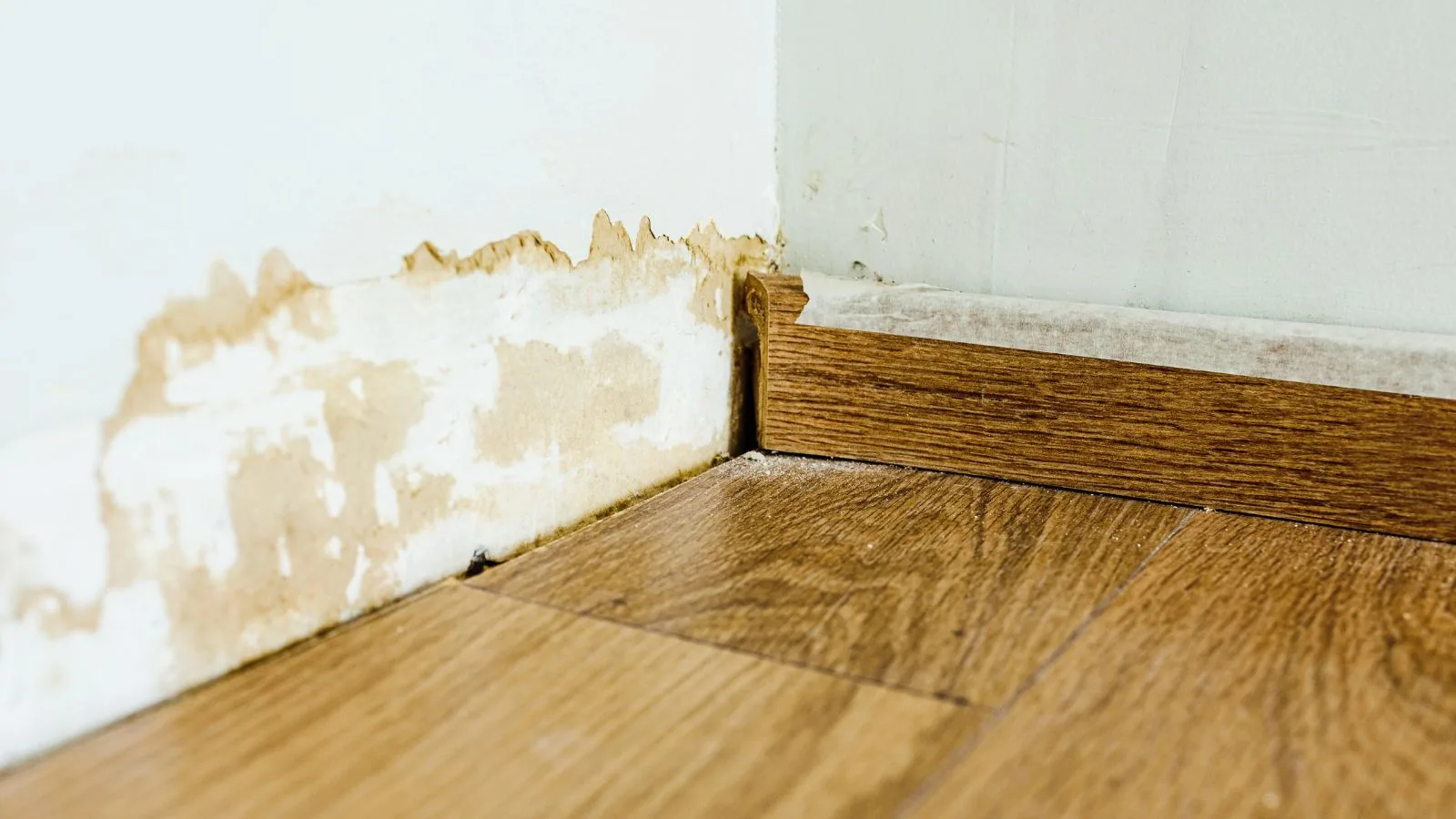
A wall that bubbles, stains or feels soft is telling you water is inside. Call (630) 580-6401 so we can measure before anyone cuts or paints.
What water does to drywall
Gypsum board is covered in paper, and paper soaks up water and holds it. Water wicks upward from the base, so the wet area is often higher than the visible stain. Soft or crumbling board, bubbling paint and mold-colored spots are all signs of long exposure.
In Downers Grove, older plaster-and-lath walls exist in some downtown houses from the mid 19th century, while later homes have drywall. Plaster dries differently, so the crew checks the wall type first.
| Condition | Typical response | Reason |
|---|---|---|
| Firm and slightly damp | Dry in place with air movers | Board and framing can recover |
| Stained but firm | Dry and seal with stain blocker | Stains return if not blocked |
| Soft, sagging or crumbling | Cut out and replace | Board has lost strength |
| Insulated exterior wall | Open and dry the cavity | Insulation traps moisture |
| Contaminated water | Remove affected board | See sewage backup cleanup |
Cut-out, dry, repair
Map the moisture
Meters and a thermal camera show where the wall is wet.
Cut where needed
Flood cuts are made above the wet line so the cavity can dry.
Dry the cavity
Air movers and dehumidifiers dry studs and plates. See structural drying and dehumidification.
Replace board
New drywall is hung, taped and finished.
Seal and paint
Stain blocker and paint close out the repair.
Walls near kitchens or bathrooms often involve plumbing, so see kitchen water damage restoration when a sink or appliance is the source.
Cost factors
Wall height wet
Higher wicking means bigger cut-outs.
Wall type
Drywall, plaster and paneling differ in repair.
Insulation
Wet insulation is replaced.
Finish match
Texture and paint matching adds time.
Source repair
Plumbing or roofing fixes are billed by those trades.
Insurance note
Sudden water damage to walls is often covered, while slow seepage often is not. Check your policy and ask your insurer, and photograph walls before they are opened.
Why paint and primer alone do not fix water damage
A fresh coat of paint on a damp wall will blister within weeks. Water stains also bleed through ordinary paint, so a stain-blocking primer is needed after the wall is dry. Skipping either step means doing the job twice.
The order of work is dry, repair, prime, paint. If the stain is on a ceiling, the same order applies, and the page on ceiling water damage repair covers ceiling specifics.
How we check what is behind the wall
Pin and pinless meters read moisture without cutting. A thermal camera shows cooler wet areas through the surface. Together they show the size of the wet zone before any board is removed.
If readings are high but the wall looks fine, a small inspection hole lets the crew see the cavity. Insulation, wiring and framing can then be checked for moisture before decisions are made.
When a wall needs more than drywall repair
- Wet insulation that has slumped or compacted.
- Rusted fasteners or electrical boxes.
- Framing with soft spots or staining.
- Signs of mold on the back of the board.
Any of these changes the scope. The crew will explain the findings and photograph them so you can decide before work continues. Mold findings are handled under the mold remediation process.
Plaster walls in older homes
Plaster-and-lath walls hold water in the lath and behind the plaster, and they do not tolerate the same cut-and-replace approach as drywall. If your home has plaster, say so on the call. Crews take readings first and decide whether to dry in place or repair sections.
Walls that stay wet behind tile and cabinets
Bathroom tile walls and walls behind cabinets hide moisture for a long time. Tile is waterproof on its face, but the board behind it may not be, and water that gets behind grout lines can sit unseen. A damp smell or loose tile are common clues.
The crew can pull a few tiles or a cabinet toe kick to read the wall, rather than demolishing the whole surface. Findings from that small opening decide what comes next.
What to do before help arrives
- Switch off the breaker for outlets in wet walls.
- Do not drill or cut into a wall until you know where wires and pipes run.
- Do not paint or caulk over drywall that is still wet.
- Photograph the wall, the baseboard and any bubbling or staining.
Drywall decisions follow the same ANSI/IICRC S500 water categories used across professional restoration. Clean water caught early can often be dried in place, while dark water usually means removal.
Drywall soft or stained?
Call and we will measure and explain the options.
The same work is available in Willowbrook and Oak Brook.
Frequently asked questions
Can I just paint over a water stain?
Not until the wall is dry and the stain is sealed. Otherwise the stain returns and moisture stays inside.
How high do you cut drywall after a flood?
Usually above the visible line, based on moisture readings. Wicking can raise damage higher than the stain.
Does wet drywall always need to be replaced?
No. Firm clean-water drywall can often be dried in place, while soft or contaminated board is replaced.
Will the repair match the old wall?
Texture and paint are matched as closely as possible, but older paint may differ slightly.
Is it safe to leave wet drywall?
Not for long. Wet board can grow mold and lose strength.
Do you paint walls?
The repair includes sealing and paint prep. Full repainting may be a separate scope.