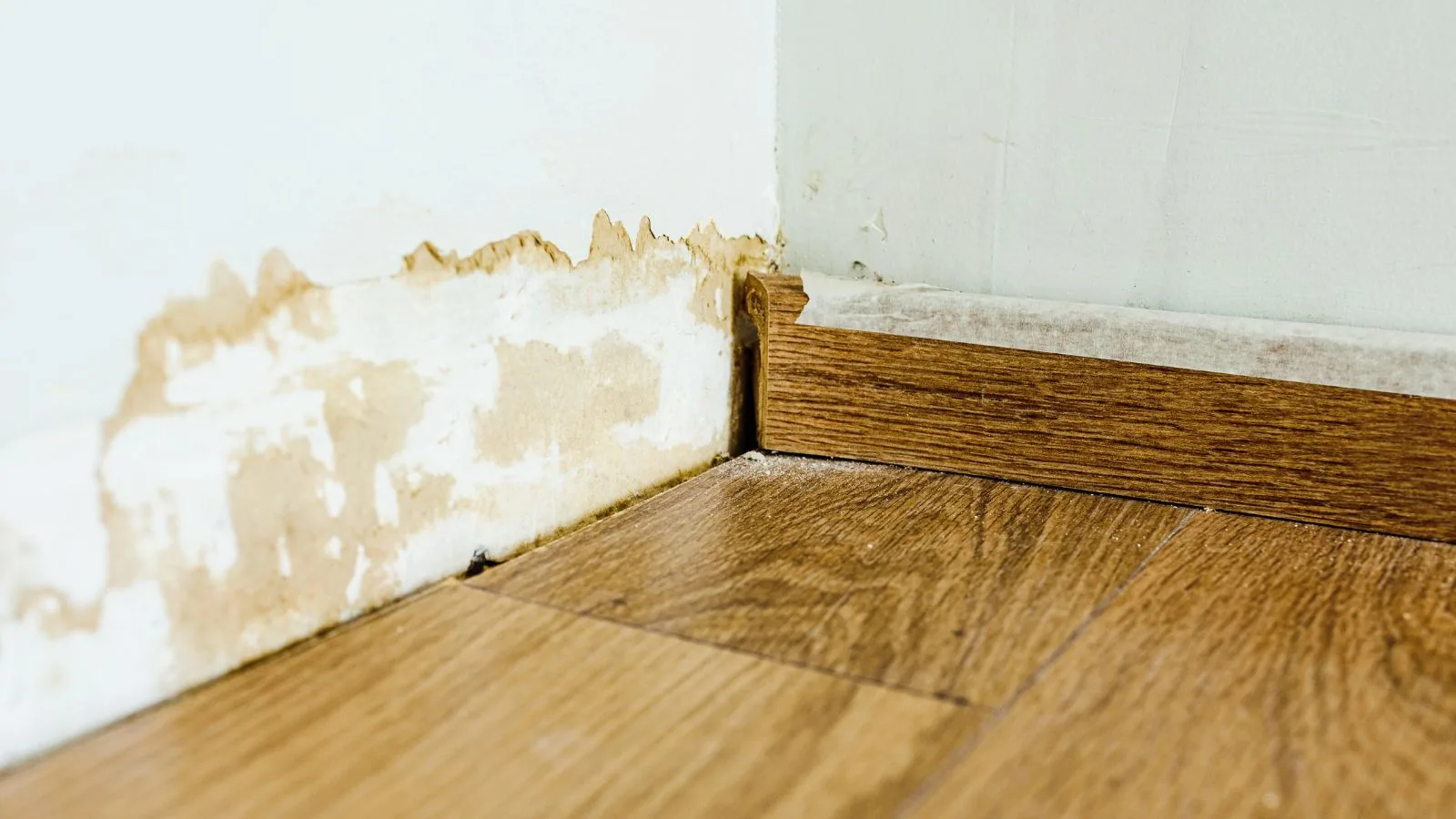
Walls are where basement mold shows up first, because they sit against cool soil and collect condensation. Before you pick up a brush, check what the wall is made of and whether it is still damp.
This guide is practical and general. It does not make health claims. Questions about symptoms belong to a physician.
What the wall is made of
| Wall type | Mold behavior | Usual approach |
|---|---|---|
| Poured concrete, sealed | Mostly on the surface | Detergent scrub, dry, re-check |
| Painted concrete block | Surface plus paint layers | Scrub, remove flaking paint, dry |
| Unpainted block | Soaks into pores | Professional assessment recommended |
| Drywall | Grows in paper and gypsum | Remove affected sections |
| Wood paneling or framing | Grows on surface and inside grain | Clean or replace based on depth |
Cleaning a hard wall step by step
- Fix the moisture source first, then wait for the wall to read dry.
- Wear a respirator, gloves and eye protection, and keep the space ventilated.
- Mist the area lightly so dust does not rise.
- Scrub with detergent and water using a stiff brush.
- Wipe with clean water and dry with fans and a dehumidifier.
- Re-check in a week and after the next heavy rain.
Skipping the drying step is the usual reason mold returns. Wet block and concrete can take days to dry, and a dehumidifier running continuously helps.
When drywall has to come out
Mold grows inside drywall, not just on the surface. If paint is bubbling, the board is soft or the stain keeps returning, the board generally needs to be removed. Cut it well beyond the visible edge and check the insulation and studs behind it.
Seal debris in plastic and carry it out without dragging it through clean rooms. See wall and drywall water damage repair for how cut-out and replacement are handled once the cavity is dry.
Protective gear and containment for small jobs
Cleaning mold stirs up spores and dust. A fitted respirator rated for particles, gloves, eye protection and old clothing reduce what you breathe and carry out. Seal the work area with plastic sheeting and tape, and turn off the furnace fan so air does not carry dust through ducts.
Place a box fan in a window blowing out to create a slight pull of air toward the outside, and keep doors to the rest of the house closed. When the work is done, wipe surfaces, bag the cloths and wash your clothes separately.
Signs the problem is bigger than the wall
- Mold on multiple walls or on the ceiling.
- A strong musty smell that persists after cleaning.
- Visible growth on insulation or inside the cavity when the drywall is removed.
- Mold returning within a few weeks.
- Water stains that grow after rain.
Any of these suggests the moisture source is still active. Fixing that source comes before more cleaning, and a professional inspection can help define the scope.
Cleaning products and what they do
| Product | Works on | Caution |
|---|---|---|
| Detergent and water | Hard surfaces | Needs drying afterward |
| Household bleach | Hard surfaces only | Never mix with ammonia or acids |
| Vinegar | Light surface growth | Smell, and not suited to porous materials |
| Commercial cleaners made for mold | Hard surfaces | Follow the label |
No product reaches mold that has grown deep into porous material, which is why removal is the answer for drywall and insulation. Surface cleaning only helps when the wall is hard and the moisture is gone.
After the wall is clean
Give the wall time to settle. Keep the dehumidifier running, recheck readings after a week and look at the wall again after the next hard rain. A wall that stays dry through a storm is a good sign.
If you plan to finish or paint, wait until readings are steady. Use a primer designed for basements and avoid sealing a wall that still holds water. Document the cleanup with dated photos, which helps if the question comes up at resale.
Choosing a time of year
Work on walls when you can run a dehumidifier and ventilate. Dry fall weather helps, and humid summer weeks make drying slow. If the weather is wet, finish the moisture fix first and delay the finishing work.
What local records suggest about basement walls
The Village of Downers Grove regulates stormwater and describes localized poor drainage areas, which are bowl-shaped lots that collect runoff. Those areas are not FEMA floodplains but they can leave basement walls damp after storms.
If your basement walls stay wet after rain, ask Village stormwater staff about your address. Keeping grading and downspouts in order is usually cheaper than treating repeated wall mold.
When a professional should take over
Call for help if the mold covers more than a small patch, if it is behind finished walls, or if the cause was sewage or flood water. A professional follows ANSI/IICRC S520, with containment, removal and a clearance check.
Real estate deals can also require documentation. If a lender or buyer asks for remediation, tell the company up front. The mold remediation page explains what documentation to request.
Paint and sealers
Do not paint over mold or use a sealer as a shortcut. Paint over a damp wall will blister, and a sealer does not stop growth in a wall that still holds moisture. Paint after the wall is clean and dry.
Mold-resistant paint can help in damp areas but is not a repair. Use it only after the cause is addressed.
Homes in Willowbrook and Oak Brook follow the same pattern: find the water, dry the wall and clean or remove what held the mold.
Water in your home right now?
The Downers Grove line is open 24/7 for emergencies and questions.
Questions readers ask
Can mold be washed off painted basement walls in Downers Grove?
On sealed, hard surfaces, yes, with detergent, ventilation and protective gear. If paint is flaking or the wall is still damp, the mold may be under the paint.
Should I use bleach?
Bleach does not penetrate porous surfaces and can be hazardous when mixed. Detergent and water do the cleaning on hard surfaces, and drying does the preventing.
Do I have to remove all the drywall?
Only the affected sections and a margin beyond them. Moisture readings show how far the damage goes.
How long should I wait before painting?
Until the wall reads dry and stays dry. This can be days or weeks depending on the wall.
Do I need a permit to replace basement drywall?
Rules vary by project. Ask the Village Community Development Department, Building Division, whether your work needs one.