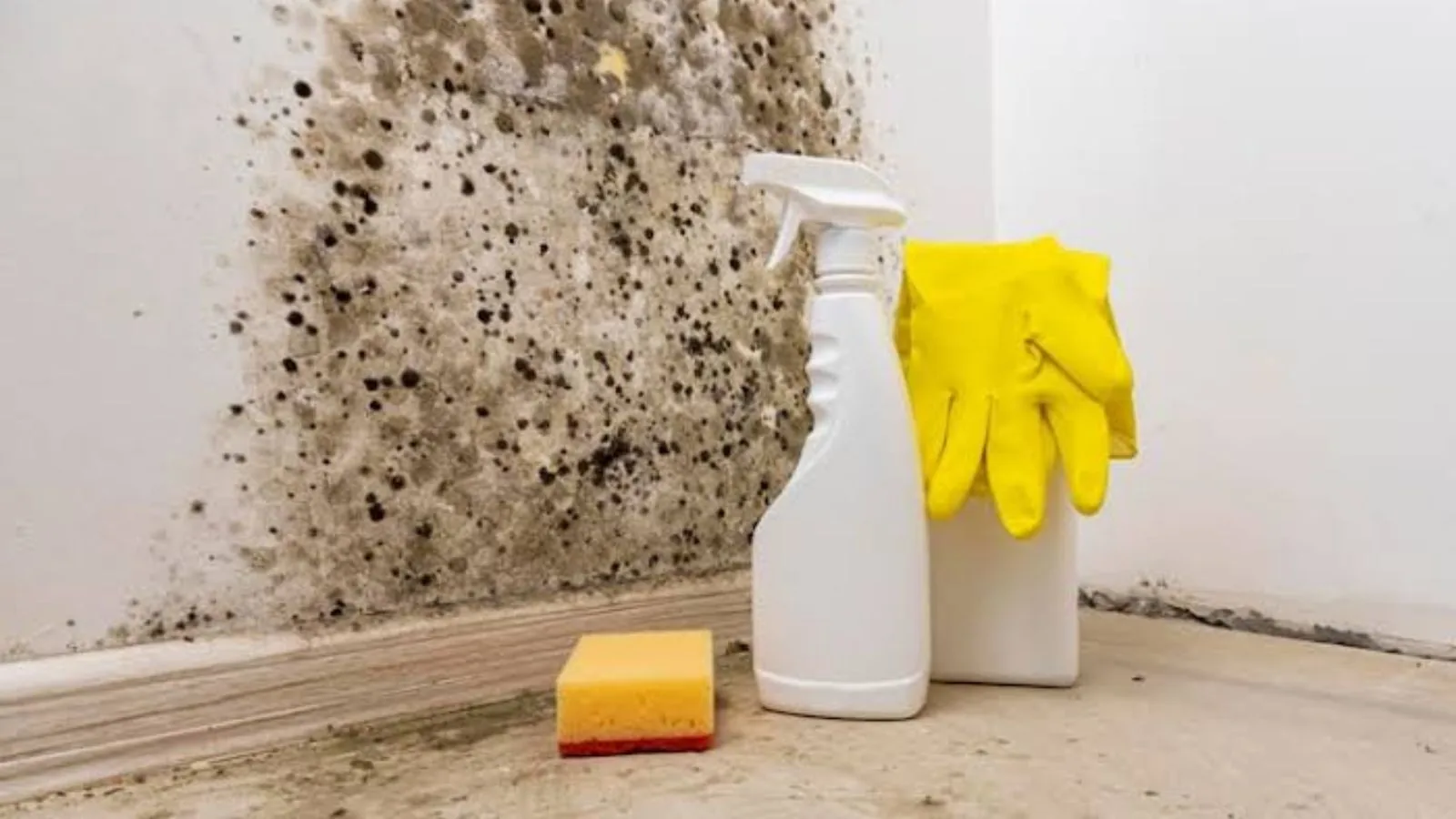
A basement is a natural place for mold because it is cool, often humid and sometimes damp from the ground. Mold grows on drywall paper, wood, cardboard, carpet and dust, but only when those materials stay wet.
This article covers what homeowners can reasonably do and when to bring in a professional. It does not make health claims, and health questions belong to a physician.
Step one: find the water
Before you scrub anything, look for the source. Check for plumbing leaks, a failed sump pump, a window well that fills with rain, a dryer vent that dumps into the basement or a humid summer with no dehumidifier.
A moisture meter, even an inexpensive one, helps. Readings on drywall and wood show whether the problem is active. If the wall is still wet, cleaning surface mold only gives the next round a head start.
| Source | Clue | Fix |
|---|---|---|
| Plumbing leak | Wet spot with no rain | Plumber repairs the line |
| Window well | Water at the sill after rain | Clear drain, cover the well |
| Sump failure | Pit overflow | Replace or add backup pump |
| Humid air | Condensation on pipes, musty smell in summer | Dehumidifier set to a steady level |
| Foundation seepage | Dampness along the wall base | Drainage contractor |
Step two: dry the space
Run a dehumidifier sized for the room, open interior doors for airflow and move stored items away from walls. Remove wet cardboard and wet carpet, since both hold water and grow mold quickly.
If the area stays damp after a few days, it needs more than a household unit. Structural drying and dehumidification uses commercial equipment with moisture readings to confirm the space is dry.
Step three: clean what can be cleaned
- Hard, nonporous surfaces such as sealed concrete, metal and glass can be cleaned with detergent and water.
- Porous materials such as drywall, insulation, ceiling tile and carpet generally need to be removed if mold has grown into them.
- Wear a well-fitting respirator, gloves and eye protection, and keep the area ventilated.
- Bag removed material in plastic before carrying it through the house.
- Do not mix bleach and ammonia or other cleaners.
Bleach does not penetrate porous materials, so it is not a substitute for removal. Cleaning is a limited fix, and it works only on surfaces and only once the moisture is gone.
When to call a professional
Call for help if the mold covers a large area, if it returned after cleaning, if it is in the air handler or ductwork, or if sewage or flood water was involved. Professionals follow the ANSI/IICRC S520 standard, which covers containment, removal and verification.
See the mold remediation page for the process, including inspection, testing and clearance. Ask any company about its process in writing before work starts.
Humidity control basics for a finished basement
Even a dry basement can collect moisture from the air. In summer, warm outdoor air entering a cool basement can condense on pipes, walls and cold surfaces. A dehumidifier that drains to a floor drain or a pump keeps humidity in a steady range without constant emptying.
A simple hygrometer, available at hardware stores, shows the relative humidity. If readings stay high even with a dehumidifier running, look for a hidden moisture source, such as a damp slab or a leaking line.
Stored items and finished surfaces
- Use plastic bins with lids instead of cardboard boxes.
- Keep furniture a few inches from exterior walls so air can move.
- Choose area rugs that can be lifted and dried instead of wall-to-wall carpet over concrete.
- Check the back of cabinets and closets, which hold stale air.
- Replace any wet drywall instead of painting over it.
These small habits help the basement stay dry between heavy rains. They also make it easier to spot a new problem early, since you can see the wall base and floor.
What a professional visit adds
A trained technician brings meters, a thermal camera and a plan. Moisture readings show whether a wall is still wet, and a camera can reveal wet areas behind finished surfaces. Together they define the area to treat.
Ask for the plan in writing, including containment, what will be removed and how the area will be verified at the end. That document is also useful if you later sell or refinance.
A seasonal check routine
Walk the basement in spring and fall. Look at window wells, wall bases, stored boxes and the sump pit. Test the pump by pouring water into the pit and watching it start.
Write down what you find, and fix small issues before storms. A fifteen-minute routine twice a year can head off much larger work.
Downers Grove basements and humidity
Local housing data puts the median year built in Downers Grove around 1974, with about 64 percent of homes built in 1979 or earlier. Older basements often have unsealed block or poured walls, original window wells and floor drains that were never meant to handle a modern finished space.
That does not mean your basement will grow mold. It does mean checking window wells, floor drains and wall bases after heavy rain, and keeping stored items off the floor. Ask the Village Community Development staff whether finishing work requires a permit.
Preventing a return
Keep indoor humidity steady, fix leaks promptly, direct downspouts away from the foundation and avoid storing cardboard directly on the floor. Re-check after storms.
No cleaning step can promise that mold will never come back. What you can do is remove the conditions that support it. Crews who serve Darien and Clarendon Hills see the same pattern in basements of similar age.
Water in your home right now?
The Downers Grove line is open 24/7 for emergencies and questions.
Questions readers ask
Does Downers Grove require a permit to finish a basement after mold removal?
Finishing work can require a permit. The Village Community Development Department, Building Division, handles plan review and inspections, so ask them about your project before you start.
Is it safe to clean basement mold myself?
Small patches on hard surfaces can often be cleaned with protective gear and good ventilation. Larger areas, porous materials and sewage or flood water call for a professional.
Will a dehumidifier get rid of mold?
It removes moisture, which stops growth, but it does not remove existing mold. Affected materials still need cleaning or removal.
How do I know if the mold will return?
No one can guarantee that. If the moisture source is fixed and the area stays dry, the conditions for growth are gone.
Should I test the mold first?
Testing can help define the extent in some cases. Ask a professional whether it adds value for your situation.